Compact Gaming PCs Are Redefining Desk-Space Performance
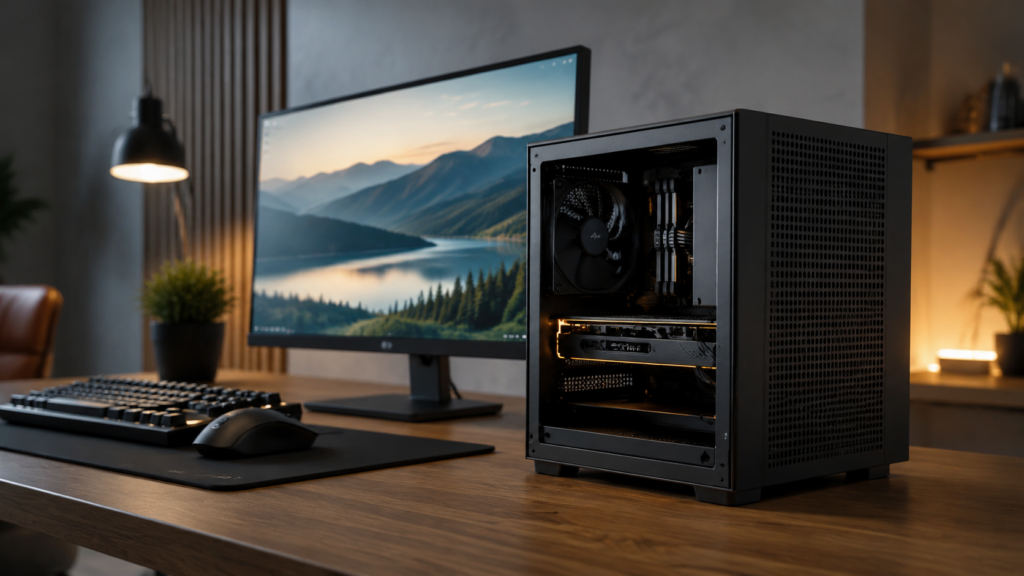
Small-form-factor computers are moving from enthusiast projects into practical everyday gaming systems. The shift is less about novelty than about removing friction from ordinary play. It reflects a market in which convenience, longevity and clear user experience increasingly influence purchasing decisions alongside raw performance.
Several forces are accelerating interest in compact gaming PCs. The most visible are efficient processors, shorter graphics cards and improved airflow layouts. Together, these changes make the idea easier to adopt without requiring specialist knowledge. They also encourage developers and hardware makers to treat flexibility as a basic product requirement rather than an optional extra.
The practical benefits are clearest for players who share a desk with work equipment or live in smaller homes. They gain more ways to fit games around real schedules, spaces and budgets. That matters because successful gaming products are rarely used under perfect conditions. They must work during short sessions, in shared rooms and across equipment that may remain in service for years.
Designers are also learning from behavior that traditional testing often misses. People improvise, combine tools and create routines that were never written into a manual. Watching those habits reveals where an interface is confusing, where hardware is unnecessarily fragile and where a community needs better information instead of another feature.
Heat, noise and upgrade access still demand careful planning. Addressing those limits requires realistic support plans, not just marketing promises. Teams need documentation, sensible defaults and a way to recover when something goes wrong. Users are more willing to experiment when they know their time, purchases and saved progress are protected.
There is an economic argument as well. Products that remain useful longer can build loyal communities, generate steady word of mouth and reduce pressure for constant replacement. Smaller companies may benefit most because thoughtful support lets them compete through trust and focus instead of matching the promotion budgets of the largest publishers.
The next stage will likely involve more standardized cases and cooler-running components. Progress will be uneven, and not every experiment will become a permanent standard. Even so, the direction is clear: gaming technology is being judged by how well it adapts to people, not only by benchmark numbers or launch-day spectacle.
For players, the best response is to compare real workflows before buying or committing time. Look for clear policies, practical demonstrations and evidence of continued support. For developers, the lesson is equally direct: observe how people actually play, remove avoidable barriers and build systems that can improve without forcing the audience to start again.